

Custom Web Application Development
Web software built around the way your team works.
Most companies reach a point where spreadsheets and off-the-shelf tools can't keep up with how they actually operate. That's usually when they call us. We design and build customer portals, internal tools, dashboards and full business platforms that run in the browser.
Our default stack is React or Next.js with TypeScript, Node.js and PostgreSQL. It's well supported and easy to hire for later. Every project gets automated tests and a deployment pipeline in the first week, so the code you inherit is something another team can pick up without a rewrite.
What’s included
Pick the parts you need. Most projects use all of them.
- 01
Customer portals
Login, account settings, invoices, documents and support tickets in one place your customers can use without calling you.
- 02
Dashboards & admin panels
Role-based access, filters, CSV exports and live updates for the people running operations.
- 03
Workflow automation
Approvals, notifications and an audit trail to replace the spreadsheet that gets emailed around every Friday.
- 04
Progressive web apps
Web apps that install on a phone and keep working offline, with no app store review in the way.
- 05
Legacy modernization
We move old PHP, .NET or jQuery systems to a current stack in stages, so daily work keeps running.
- 06
Real-time features
Chat, live notifications and shared editing built on WebSockets and event queues.
What you walk away with
- Discovery workshop, scope document and clickable prototype
- Production web application that works on desktop and mobile
- Documented REST or GraphQL API and database schema
- Automated tests, CI/CD pipeline and a staging environment
- Launch support, handover docs and full ownership of the source code
Flubr, Influencer marketing startup, Pakistan
Tools we use
We choose per project. These come up most often for web apps work.
12345678910111213141516How a project runs
Five stages, two-week sprints and a demo at the end of every one.
Recent projects
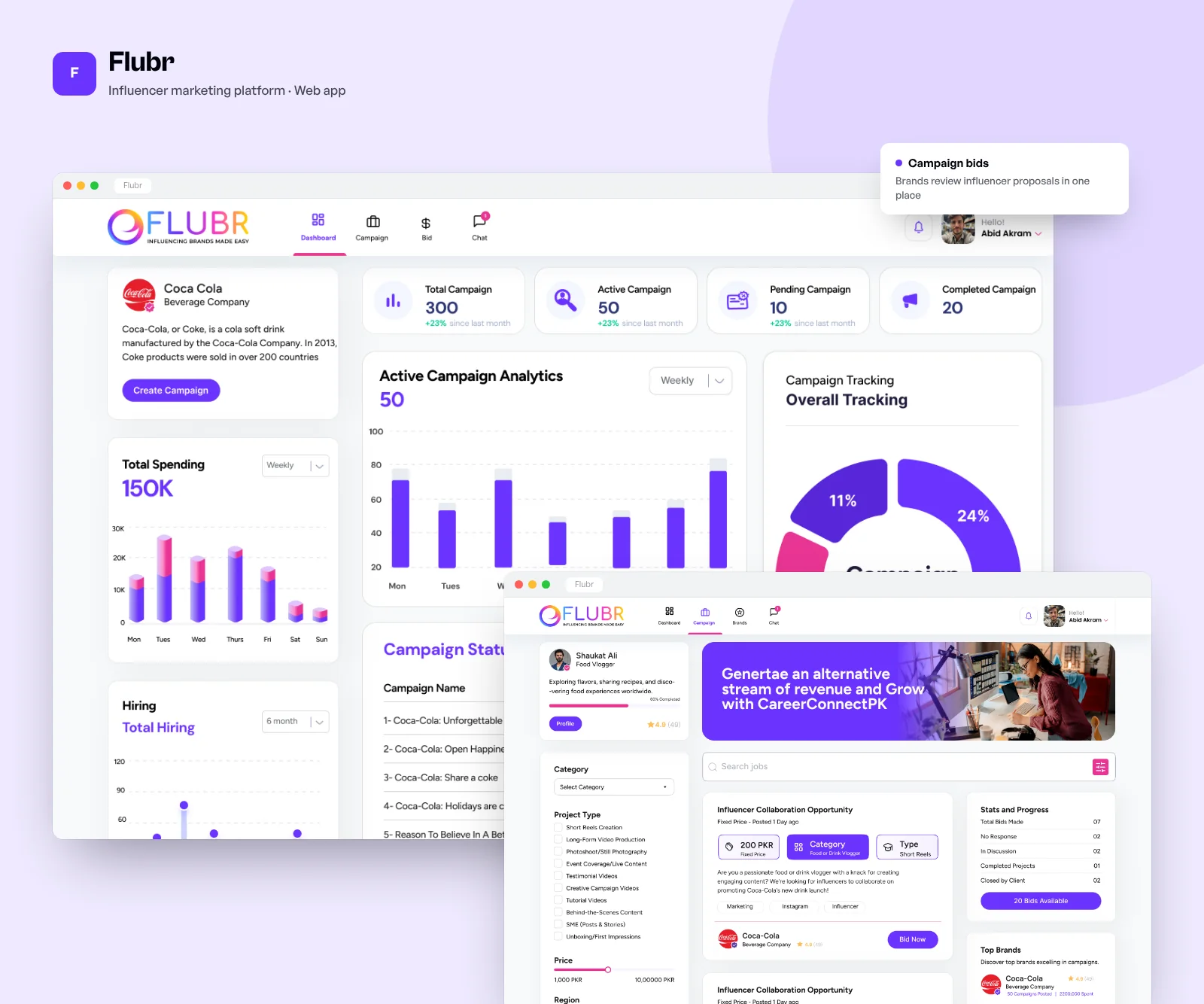
Flubr
An influencer marketing platform where brands post campaigns, micro-influencers bid on them, and both sides manage the work, chat and payments in one place. Influencer marketing startup, Pakistan.
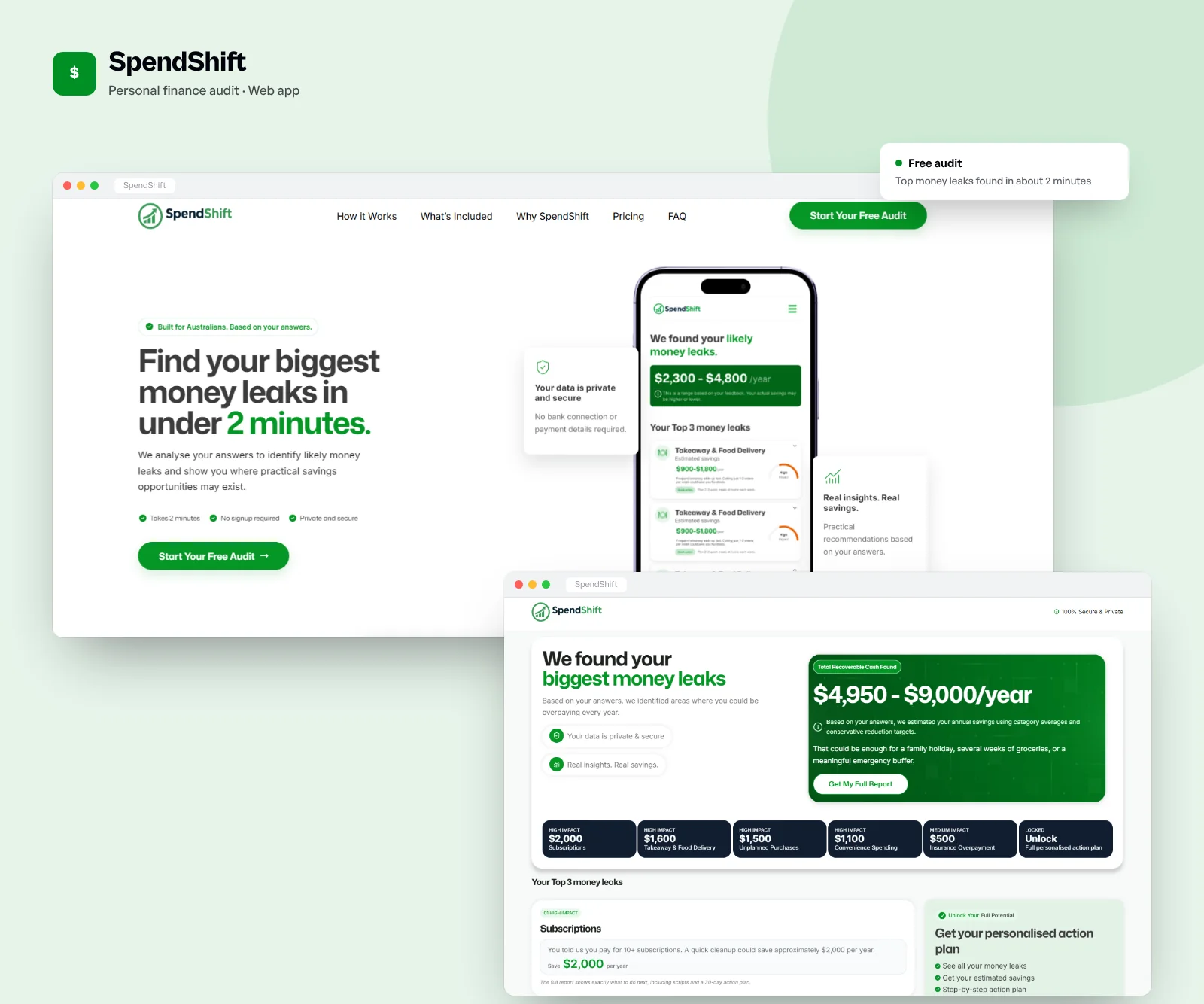
SpendShift
A two-minute spending audit for Australians that finds likely money leaks from a short questionnaire, with no bank connection required. Personal finance startup, Australia.
Web Apps: common questions
How much does custom web application development cost?
It mostly comes down to scope, integrations and how many user roles you need. A focused internal tool or portal usually starts around $15k-$40k. A multi-role platform with several integrations tends to land between $50k and $150k or more. We give you a fixed estimate after a short discovery phase.
How long does it take to build a web app?
A well-scoped first release usually takes 8-16 weeks, including discovery, design, development and QA. Bigger platforms ship in phases. You can launch the core features early and add to them every two-week sprint.
Which technology stack do you recommend?
For most projects we use React or Next.js with TypeScript on the front end and Node.js with PostgreSQL behind it. It's fast and there are plenty of developers who know it. If you already run on .NET, Laravel or Python, we'll build on that instead of starting over.
Will I own the source code?
Yes. The code, designs and documentation are yours from the first commit. We work in your repositories, or transfer ours to you at the end. We don't use proprietary frameworks that tie you to us.
Can you take over an existing web application?
Yes, and we do it often. We start with an audit of the code and infrastructure, fix the riskiest problems first, then carry on with development. A good share of our projects started with another team.