

MVP Development for Startups
A first version real users can try in about 10 weeks.
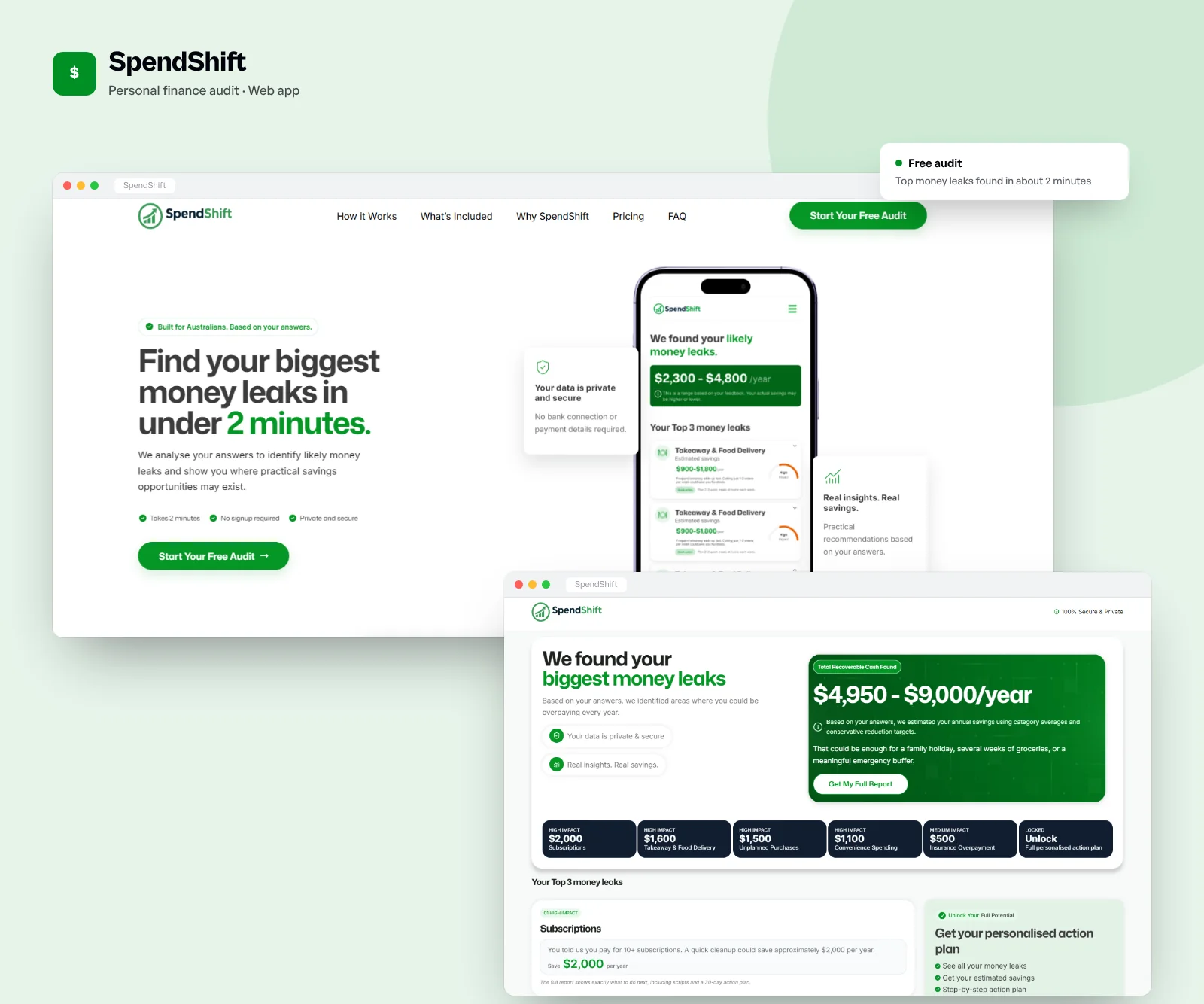
An MVP should answer one question: will people use this, and will they pay for it? We help founders cut their feature list down to what's needed to answer that, then build it properly so you don't have to throw it away when it works.
We've helped founders get to their first paying customers, demo days and seed rounds. The usual stack is Next.js or React Native with Supabase or Node.js, because it's quick to build on and doesn't need replacing once you have traction.
What’s included
Pick the parts you need. Most projects use all of them.
- 01
Product scoping
A one-week workshop to agree on the core user, the main job the product does and what to leave out.
- 02
Rapid prototyping
A clickable prototype in the first two weeks that you can show to users and investors.
- 03
Web & mobile MVPs
Production code for web, iOS or Android, with sign-up, payments and analytics included.
- 04
Investor-ready demos
A stable demo build and a short technical overview for due diligence.
- 05
Analytics from day one
Event tracking set up at launch so you can see what users actually do.
- 06
Path to scale
Architecture that holds up after launch, so the MVP becomes version two instead of being rebuilt.
What you walk away with
- Scope document with a prioritized feature list
- Clickable prototype tested with target users
- Launched MVP on web, iOS or Android
- Analytics dashboard and a feedback loop
- Roadmap for version two based on what users did
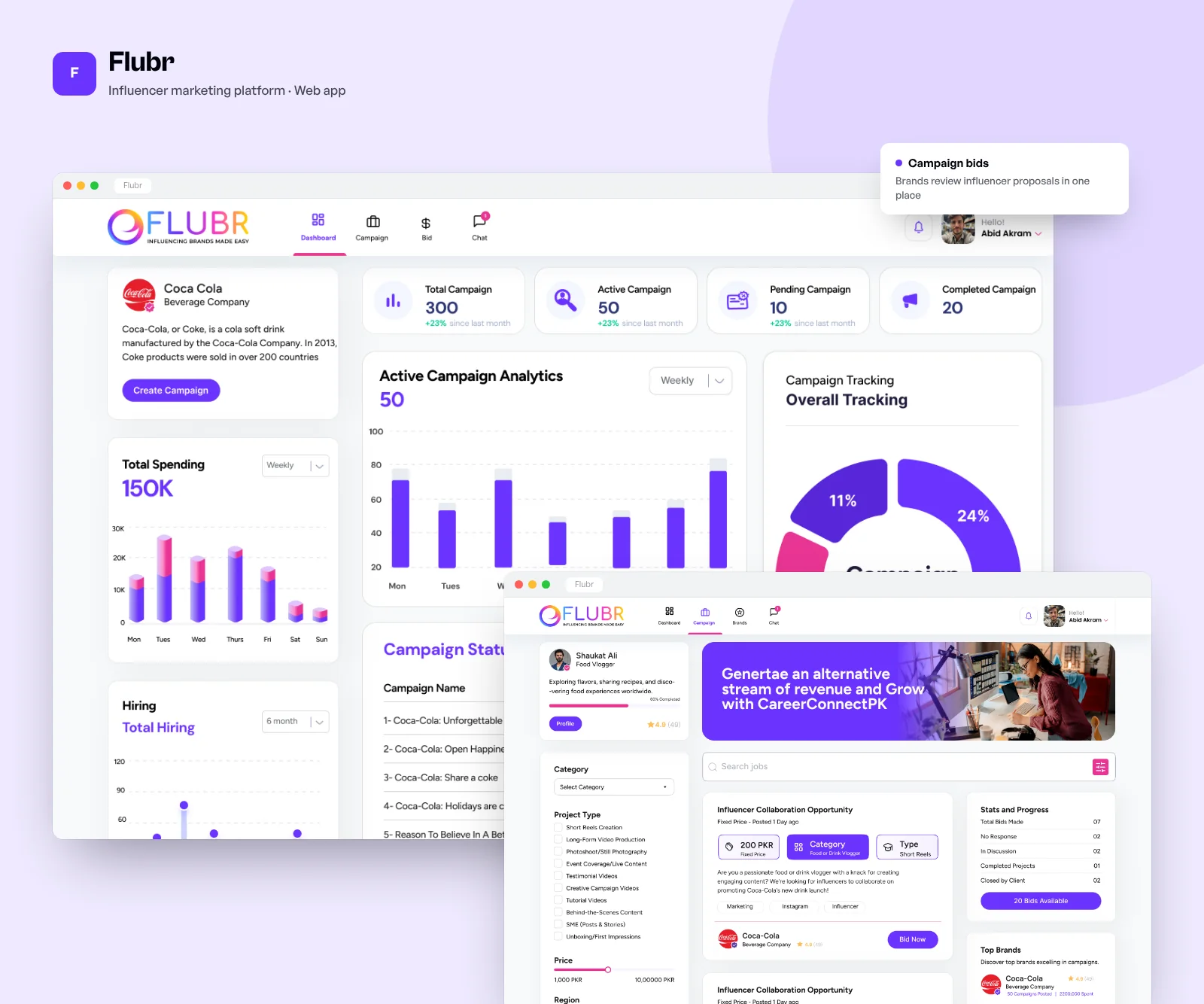
Flubr, Influencer marketing startup, Pakistan
Tools we use
We choose per project. These come up most often for mvp development work.
1234567891011121314How a project runs
Five stages, two-week sprints and a demo at the end of every one.
MVP Development: common questions
How much does an MVP cost?
Most of the MVPs we build cost between $20k and $60k. A web-only product with a simple backend sits at the lower end. Mobile apps with payments, maps or real-time features push it higher. We'll suggest ways to cut the scope if the budget is tight.
How fast can you launch an MVP?
Typically 8-14 weeks. Week one is scoping, weeks two and three are design and prototype, and the rest is development in two-week sprints with a demo at the end of each.
What if my idea changes during the build?
It usually does, and that's fine. We plan in two-week sprints, so changing priorities costs very little as long as we know early.
Will the MVP code be thrown away later?
No. We build MVPs with the same standards as larger products: tests, code reviews and a sensible architecture. When you raise money, your new team can keep building on it.
Do you work with non-technical founders?
Most of our startup clients are non-technical. We explain decisions in plain language and can act as your technical lead until you hire one.